 Wine Tasting Firenze
Florence Wine Windows: A Map of the Ones That Still Serve
Last reviewed August 2026
This Florence wine windows map places the buchette with published street addresses and separates the ones that still pass a glass to the street from the ones that are architecture. The city counts about 170 hatches in the municipality; the association that catalogues them counts over 300 across Florence and Tuscany and marks authenticated ones with a brass plaque. Six are named as serving, one of them passes gelato rather than wine, and all of them work in the evening. For the seated version of the same idea, see the wine tastings in Florence we compare.
Quick answer Which hatches still pour, where they are, and how to tell a real one from a bricked-up niche
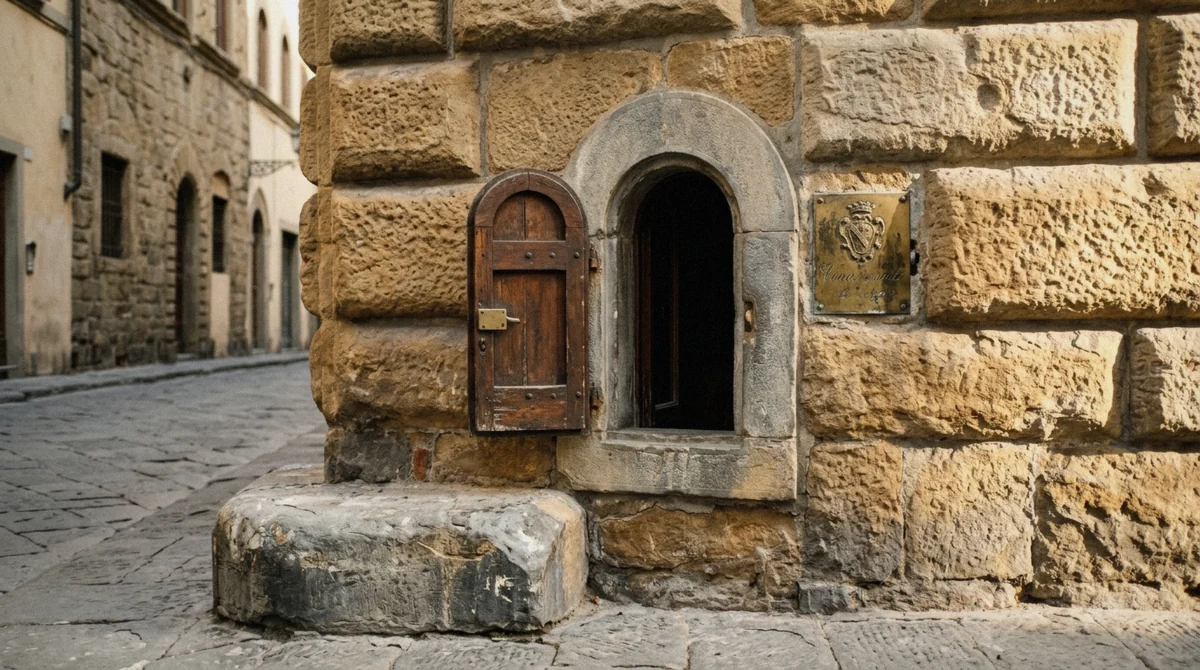
Florence's wine windows are small arched hatches in palazzo walls, cut so that a flask could be passed to the street, and a handful of them serve again. The city's own tourism office counts about 170 buchette in the municipality; the Associazione Buchette del Vino, which runs the census, lists over 300 references across Florence and Tuscany and fixes a brass plaque to the ones it authenticates. Six are named by the association as serving through the hatch, and the map below places the ones with published street addresses.
Key takeaways
- The association names Vivoli, Babae, Cantina de' Pucci, Divin Boccone, Pietrabianca and La Buchetta as serving through the window
- Vivoli passes gelato, not wine, which surprises people who arrive expecting a glass
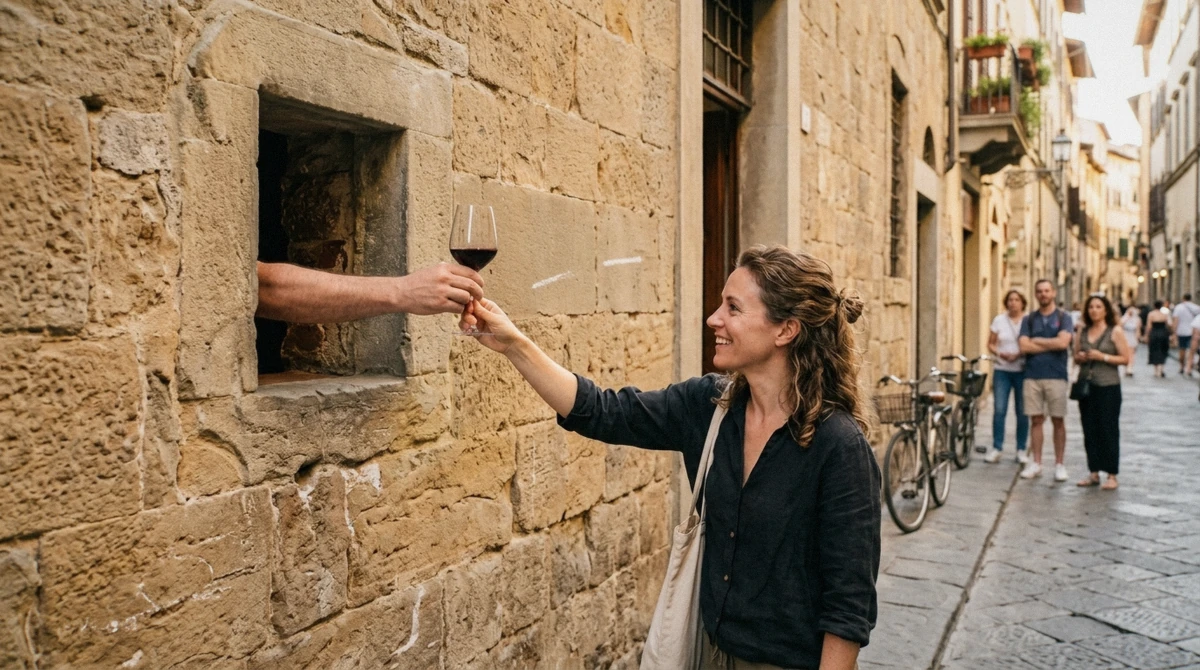
- Babae's hatch on Via di Santo Spirito serves in the evening hour and is the best-known pour
- A brass plaque is the association's authentication; most openings you pass are bricked up or decorative
- A guided wine windows walk arranges the pours and adds a seated tasting at the end
- For a full seated flight instead, the cellar tasting by the Mercato Centrale runs an hour
What a Buchetta Del Vino Actually Is
A buchetta is a service hatch. Florentine families with estates in the countryside sold their own wine directly from their city palazzi, and rather than open a shop they cut a small arched opening at waist height in the street wall. The city's tourism office gives the working dimension: the openings were sized to pass a flask of 23 by 36 centimetres. Money went one way, a filled flask came back the other, and nobody had to be admitted to the house.
They were a tax and status arrangement as much as a convenience. Selling wine from your own estate direct to the public sat in a different fiscal category from running a tavern, and a noble family could trade without keeping a shopfront.
Several reopened in 2020 for the obvious reason, and a few kept going afterwards because the format works: a glass changes hands, nobody queues indoors, and the novelty draws a crowd on Via di Santo Spirito every evening. That is the honest state of it today. This is not a preserved tradition running unbroken; it is a revival, and the number of hatches actually pouring is small.
Wine Windows You Can Find on a Walk
Every pin below is a window named with a published street address by the Comune di Firenze tourism office or the association's own list. Pins mark the address, not the exact hatch, so look up at the wall when you arrive. Two of the six are within five minutes of each other in Oltrarno and the historic centre.
Which Windows Actually Serve
The six on the association's list
Being catalogued and being open are different things, and this is where most guides blur the line. The association's own site names six windows as serving through the hatch. What each passes through it varies, and the hours move, so treat the last column as a starting point rather than a timetable.
Last verified: August 2026.
| Window | Where | What comes through the hatch | Worth knowing |
|---|---|---|---|
| Babae | Via di Santo Spirito 21r, Oltrarno | Wine by the glass, and spritz | The evening buchetta hour draws a queue; travellers report a glass at about 8 euro and a deposit on real stemware |
| Vivoli | Via Isola delle Stinche 7r | Gelato | A wine window in form, an ice cream window in practice. Go for the gelato, which is the point |
| Cantina de' Pucci | Via de' Pucci 4 | Wine | Behind the Duomo, on a street most visitors cross without looking up |
| Divin Boccone | Central Florence | Wine and food | Listed by the association; confirm hours before making a detour |
| Pietrabianca | Central Florence | Wine | Listed by the association; the smallest of the group |
| La Buchetta | Central Florence | Wine | Named for the hatch itself |
How to tell a real one
The association fixes a brass plaque beside the windows it authenticates, and that plaque is the only quick test worth relying on. Florence has openings that were something else entirely, later infills that look convincing, and modern copies cut for decoration.
The other tell is the shape. A genuine buchetta is small, arched, at roughly waist height, and framed in pietra serena, the grey sandstone the city builds with. It is sized for a flask, not for a face.
And a practical rule: they serve in the aperitivo hours, from around six or seven in the evening, not on demand at eleven in the morning. Turning up at midday and finding a shuttered hatch is the single most common disappointment here.
Plague, Tax and a Hatch in the Wall
Why the openings exist at all
Two stories circulate about the buchette and only one of them is the whole picture. The popular version ties them to plague years and contactless trade, which is the reason they came back in 2020 and a real part of their history. The fuller version is commercial: selling your own estate's wine direct to the public from your palazzo was a recognised trade with its own rules, distinct from running a tavern, and the hatch was the mechanism that made it possible without a shopfront or a crowd in the courtyard.
Both explain the same design. Small enough for a flask and nothing more, low enough to hand a filled vessel back at waist height, cut into the street face of buildings whose owners had no interest in a queue at the front door.
What is being revived, and what is being invented
Five claims circulate about the buchette, and they are not equally true. The table sets each against what we could actually verify in the Comune's own tourism material and the association's census, checked in August 2026.
| Claim you will read | How true it is | What we could verify |
|---|---|---|
| Hundreds of wine windows survive in Florence | Partly | The Comune counts about 170 in the municipality; the association counts 300-plus across Florence and Tuscany |
| The windows reopened during the pandemic | True in part | Several did resume service in 2020; only a handful still pour today |
| Every arched hole is a buchetta | False | Infills, later doorways and decorative copies are common; the association's brass plaque is the test |
| You can drink at any of them | False | Six are named by the association as serving, and one of those passes gelato |
| They serve all day | False | Service is in the evening hours and varies by venue |
How to Spend Your Evening
If You want the walk and the architecture
Do it yourself with the map above, and finish at Babae for the seven o'clock hour
If You want the pours guaranteed
Book the guided wine windows walk, which arranges them and ends seated
If You want a serious tasting, not a glass on a street
Take the seated cellar tasting: three or seven wines in an hour
If You are travelling with someone who does not drink
The guided walk has a non-alcoholic version; the hatches themselves do not care either way
If You have the whole day free
Do the hills instead and keep the windows for the evening: start with the Florence wine tasting comparison
A Self-Guided Wine Window Walk
A route that works in about ninety minutes
- Start at Palazzo Medici Riccardi, Via de' Ginori 14, and find the hatch on the rear wall
- Walk south to Cantina de' Pucci, Via de' Pucci 4, one of the windows still in service
- Cut east to Palazzo Pazzi Quaratesi, Via del Proconsolo 10, on the busy walking street
- Continue to Vivoli, Via Isola delle Stinche 7r, and take the gelato rather than waiting for wine
- Head west across the river to Via dei Palchetti 4 and Palazzo Antinori on Via del Trebbio
- Finish at Babae, Via di Santo Spirito 21r, in time for the evening buchetta hour
- Look for the brass plaque at each stop, and look up: several are above eye level in shadow
What the guided version adds
Doing it alone costs the price of what you drink and gets you the walk. What you will not get is the pours arranged in advance, which matters because the hatches that serve do so on their own schedule and can be closed on the evening you turn up.
The guided wine windows walk covers the same ground with a local guide, hands the glasses out through the windows, and ends with a seated tasting of Tuscan wine and appetisers. It runs two and a half hours, includes hotel pickup, and has a vegetarian and a non-alcoholic version on request. Whether that is worth the difference depends on whether you would rather be shown the city or find it yourself.
Either way, this is an evening activity. Build the rest of the day around it, not the other way round.
Wine Window Questions
Are there any active wine windows in Florence?
Yes. The Associazione Buchette del Vino names Vivoli, Babae, Cantina de' Pucci, Divin Boccone, Pietrabianca and La Buchetta as serving through the hatch. Vivoli passes gelato rather than wine, and the others serve in the evening hours.
How many wine windows are there in Florence?
The city's tourism office counts about 170 in the municipality of Florence. The Associazione Buchette del Vino counts over 300 references across Florence and Tuscany, which is a wider area, so both figures are correct within their own scope.
Where can I find authentic wine windows in Florence?
Look for the association's brass plaque, and for a small arched opening at waist height framed in grey pietra serena. The map above places seven with published street addresses, from Palazzo Medici Riccardi to Babae in Oltrarno.
What time do the wine windows open?
Broadly the aperitivo hours, from around six or seven in the evening, and the exact hour differs by venue and moves with the season. A midday walk finds the architecture but no wine.
How much does a glass from a wine window cost?
About the same as a glass anywhere in the centre. Travellers report roughly 8 euro at Babae with a deposit on proper stemware, though prices and hours are the venue's to change.
Why were the wine windows built?
So that noble families could sell wine from their country estates directly to the street without opening a shop or admitting buyers to the palazzo. The openings were sized to pass a flask of 23 by 36 centimetres.
The wine windows reward a slow walk more than a checklist. Most of what you pass is closed and always will be, the brass plaques tell you which openings are the real thing, and one evening glass handed through a wall on Via di Santo Spirito is the whole experience in a single moment. Go at seven, look up, and do not expect the city to perform on schedule.